
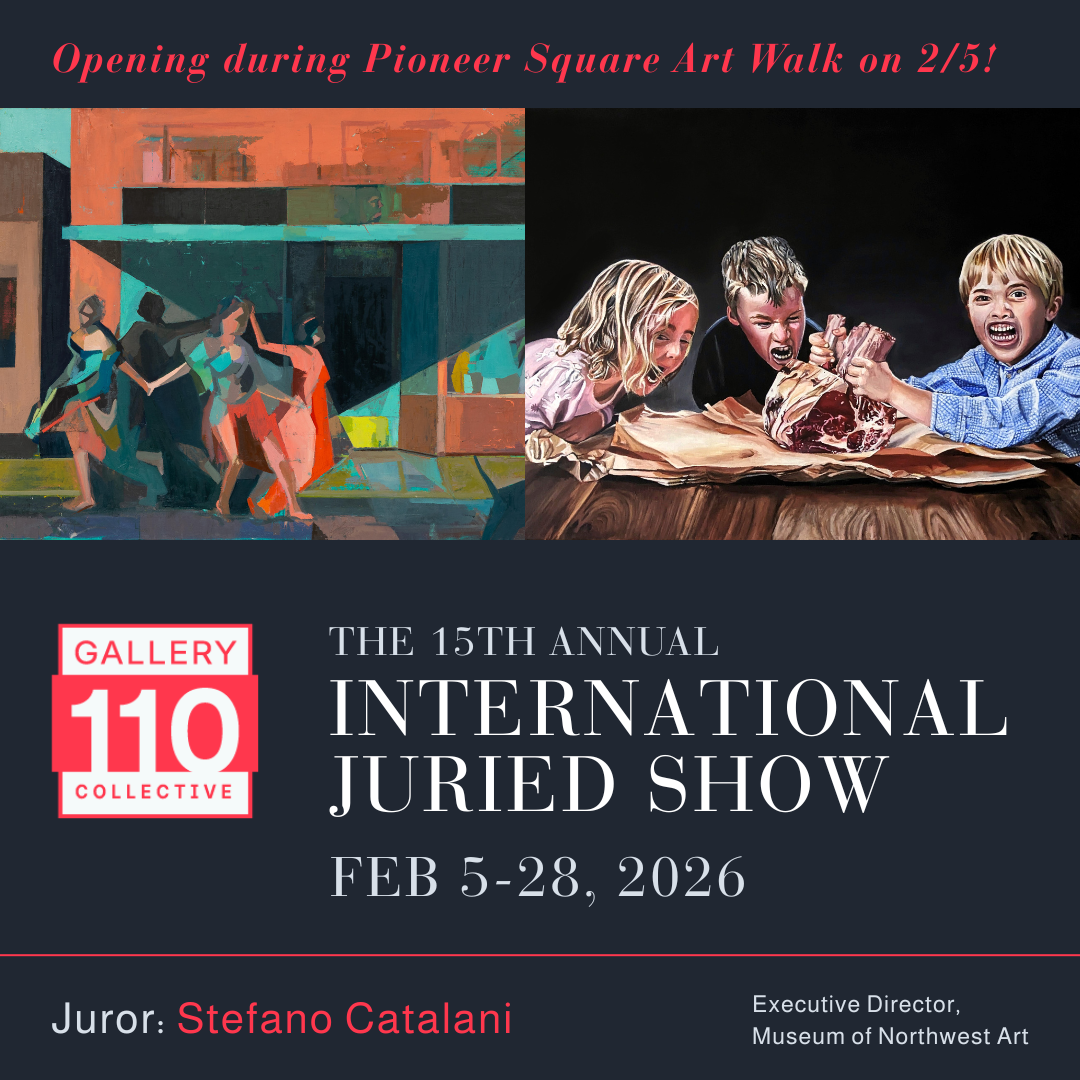
February 5-28, 2026
Since 2011, Gallery 110’s juried exhibition has showcased works by emerging and established artists chosen by a prominent juror with ties to the artistic community of the Pacific Northwest. Our location and reputation offer artists exposure to professional reviews, access to Seattle’s Pioneer Square gallery district, and the popular First Thursday Art Walk. Finalists’ works were displayed at Gallery 110 from February 5 through February 28, 2026.
Stefano Catalani, this year’s juror, awarded first, second and third place prizes of $1000, $500 and $300 at the Awards Reception on Friday, February 6th, 2026. He emphasized the difficulty of choosing ‘winners’ in such a varied presentation.
Oceanic Divide, Weston Lambert
Youngs River, Greg Navratil
My Mom and I, Stevie Salcido
The ‘People’s Choice” award of $200, tallied from all votes gathered from visitors at the preview night and the Pioneer Square Art Walk, went to Heidi Keith for Recollection, narrowly beating Rora Blue’s OUCH II by just a few extra votes—however, every single artist in the show received votes from the crowd. (Yes, all 49 of them!)
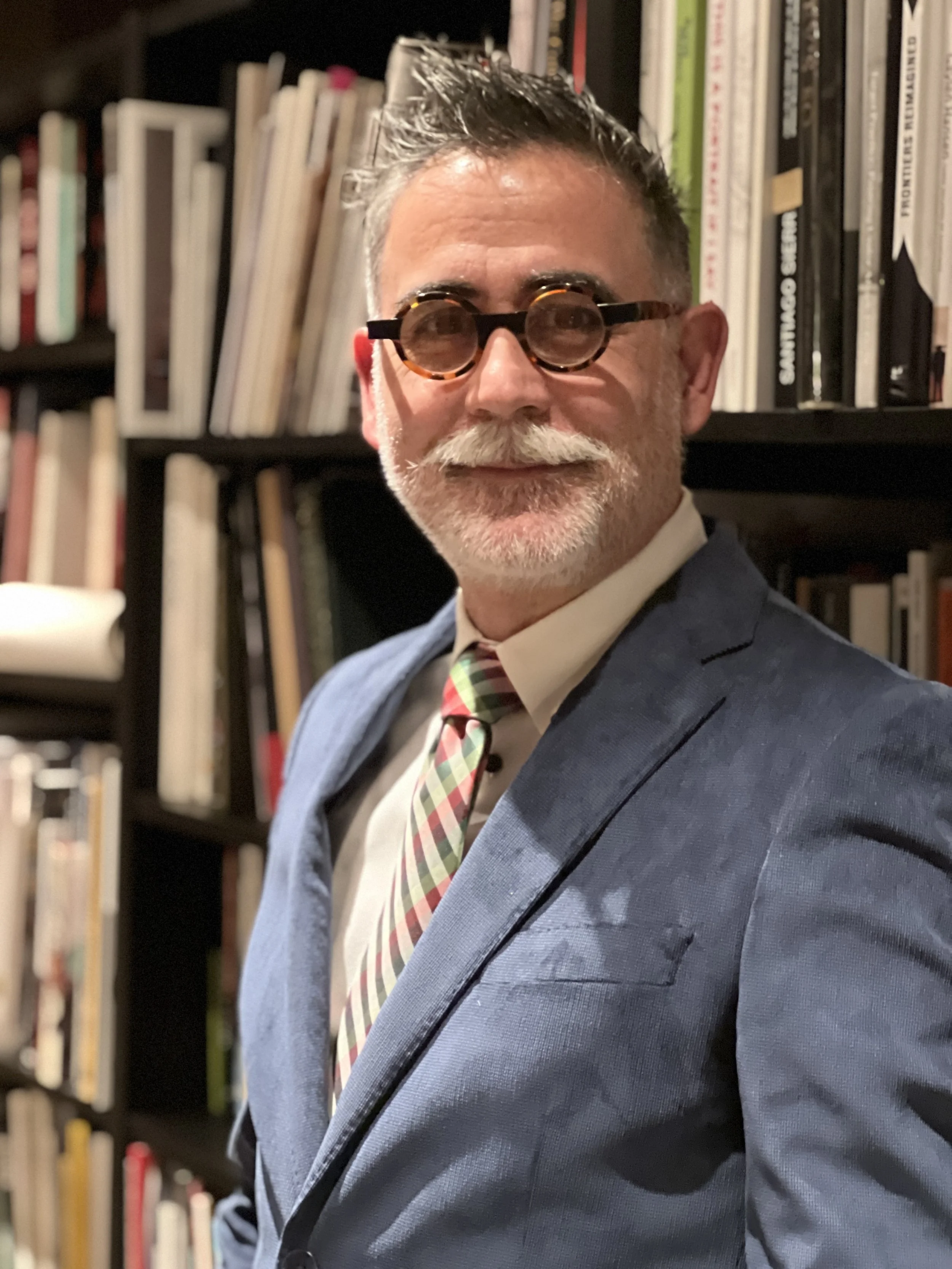
About the Juror
Stefano Catalani is the Museum of Northwest Art's Executive Director. He began his tenure at MoNA in 2022 after leading Gage Academy of Art, Seattle for 5 years, also in the role of Executive Director. Previously, Catalani was the Director of Art, Craft & Design at Bellevue Arts Museum. He conceived and launched the successful series Bellevue Arts Museum Biennials, focused on celebrating craft and design in the Pacific Northwest.
About the Artists
Paul Adams
A photographer for over 40 years, Adams was born and raised in the Pacific Northwest and grew up backpacking and exploring the nearby coastal ranges as well as running rivers above the Arctic Circle in Alaska. He was awarded a Masters of Photography in 1996 and has taught photography at Utah State University, the Florida Keys, and Brigham Young University. He lived in Europe as a Fulbright scholar and taught photography in Northern England. His work has been displayed both nationally and internationally, including the National Portrait Gallery in the Smithsonian and the Royal Photographic Society. His photographs are included in several permanent collections, including the Nora Eccles Museum of Fine Art, Chattahoochee Valley Art Museum, the Chicago Institute of Art, and Brigham Young University Art Museum. He has been a professor of photography at BYU since 2002.
Sharon Allicotti
My work embraces the time-honored practice of creating psychologically-resonant pictorial tableau emphasizing an evocative, lyrical relationship between the human subject and the environment in which they are situated. I strive to compellingly depict observed appearances, remaining faithful especially to my sitter's features—but ultimately—to transcend illusionist specificity in favor of eliciting a more universal response: the beholder's empathy. It is my belief that figurative realist art's power lies in its capacity to provoke imaginative interpretation, especially through recognition of our common experience.
Steffani Bailey
There's a lot that goes into the making of something. This statement describes my general approach: When I work, I begin a process of "finding", moving myself through steps and stages, where each step suggests the next. I work on the wall with wood panels and oils, at times canvas. There's painting, arranging, reviewing, adding, and subtracting. I move things around quite a bit, it's both an emergent process and a formal one. The wood panels and their fragments have an architecture: I'm aware of shape, texture, line—color can often be my starting point. I'm forever influenced by what the natural environment shows me, be it the weather, light, color, flora or fauna, it's always there in my work.
Rora Blue
I live in a body with bones that ache, a heart that beats twice as fast as everyone else's, and fingertips that go numb. Most of the time my body does not feel like mine. This is not a tragedy; it is simply a fact of my existence. Queer and disabled people are often viewed as unnatural. I respond to this in my work through using natural materials and imagery of the outdoors. My work repositions the queer and disabled body as being synonymous with nature. I introduce an alternate trans-disabled reality by utilizing transgender and disability-specific medical objects that are commonly disposed of or hidden away. Through the overlaying of photographs on top of hospital fluorescent lights, weaving flowers in between bandages, and suspending images of the sky within IV bags, I propose a world in which bodies like mine are cared for and celebrated.
Cathy Braasch
Daily Drawings is a series of durational works on paper in ink and graphite. Braasch constructs each image by adding one layer per weekday over the course of a month. Together, these drawings become a personal, graphic record of time, experience, and perception, rendered with deliberateness and happenstance alike. Conceptually, the drawings operate simultaneously across three interconnected scales. First, the personal experience—a meditative ritual that accepts the variations and incongruities of daily life and is a receptacle for memory. Then, imagined as architectural studies—the accumulation of simple geometries generating complexity. Finally, at the scale of the city—a reflection of the inspiring, incremental development of the built environment and the productive qualities that arise from this growth. The work encourages the appreciation not only of the outcomes but also of the experience of creative production.
Olena Burykina
My primary focus is portraiture and figurative painting. I seek a connection with the model that I can translate to the surface. The “Floating Throne” painting is a portrait of my friend Ashley on her houseboat on the water. I captured her sitting on a pile of chairs on the top deck of the houseboat. For a moment I saw her as queen of her small floating kingdom sitting on her throne and surrounded by her entourage. I asked her to pose for small study that developed later in a bigger painting.
Arvid Choudhury
The work is from a series I began after a trip to Washington and Portland in late August 2025. At 3:45 am, I was in a car in Vancouver, Washington, waiting for my mother and brother to drive into Portland when a gorgeously neon butterfly came in my line of vision. Immediately I asked myself, what would it mean to rob this butterfly of its life—of its beauty—to cut off the brightness and hope that the neon butterfly imbued? Canvases and skin are both porous; the initial insight was to treat canvas as skin and suffocate that body with paint, making it the representative of the American Other. This exploration came about from wanting to cope with and understand the murder of George Floyd. KILLING BUTTERFLIES AT A QUARTER TO 4 AM addresses societal patterns as it pertains to black bodies, brown bodies, immigrant lives, and otherness through repetitive mark-making mapping change in behavior and treatment.
Morgan Curtis
Portland-based artist Morgan Curtis paints at the intersection of dream and recollection—works that are playful, unsettling, and alive with the logic of the subconscious. Using oil and acrylic in luminous pastels and experimental scales, he constructs cinematic brainscapes where figure and ground collide, forming hallucinatory riddles that feel both comic and uncanny. Each painting unfolds through improvisation and revision, guided as much by chance as intention. Curtis invites viewers into shifting worlds where meaning stays fluid and discovery never ends. His paintings are open-eyed dreams—dialogues between the familiar and the strange, urging us not to decode but to wander, to meet the unexpected both on the canvas and within ourselves.
Gray Davidson
The RENDITIONS series are investigations into the asymmetrical duality of ancestry using steel, jute, and burlap materials. I created these sculptures while processing my place in lineage — both as a descendant (my family's exile from fascist Spain nearly a century past) and as a potential ancestor (navigating with my partners whether and how to become a parent). The works explore the technologies we create for moving between states: from stasis to motion, from received story to chosen narrative, from one generation's ending to another's beginning. Each RENDITION is a kind of emotional alchemy, transmuting sorrow into grace. The weight of infinite past and infinite future, compressed into the present moment where we decide what to pass on.
Liz Ewings
I am fascinated by water. I love its movement and chaos, its transparency, how it reflects and absorbs light and color. In the paintings of the Icons series, I explore falling water in cascades in Pacific forests. I approached these paintings as both color studies in green, and gestural studies of the flow of water. I used a red (alizarin crimson) underpainting, and left some of the red lines unpainted to create a vibrating contrast with the intense greens. Scale is significant in these pieces. I embraced the physicality and expressiveness of the flow of water. I use thick paint and thicker strokes, as I imagine following the path of tumbling water molecules as they fall over the rocks. The waterfalls of the Icons paintings reflect the constant change that takes place in nature, revealing the complexities of geologic scales and the ephemeral nature of our planet.
Angela Fleet
My work explores the space between observation and invention through narrative painting. I often start with a real place or object that catches my eye. One ongoing source of inspiration is an untouched midcentury laundromat in Tieton, Washington. It has become a kind of stage where I can place figures and build scenes that feel both familiar and imagined. I collect visual data through sketches, photos, and studies, then use it to create new compositions. The figures I paint come from people I know, memories, or historical works. My process is physical and intuitive. I layer paint, scrape down, shift color, and rework compositions as I go. I often use a grid to keep the surface active and balanced. Painting is a way for me to explore questions and make sense of what is around me. I am most inspired when there is room for ambiguity, interpretation, and the unexpected.
Colin Fox
A Seattle-area-based fine art artist who creates images which are inspired from architectural details, I enjoy sharing this vision with others and hopefully inspiring them to also look at their surroundings. My passion for photography began in Ireland inspired by so much visual history on offer. My working career had extensive travel all around the world, exposing me to the joy of place - culture - people. This particular work, Acuminate, displays this beauty.
Christopher Hartshorne
My current series "Graphic Myths" shows scenes of figures in states of contemplation. They are large relief prints made by carving linoleum blocks and pressing them onto Japanese paper. The imagery is influenced by both the design and content of graphic novels, showing figures in a state of indecision and quiet anxiety. My figures are stoic but physically altered. One figure is fragmented and has oversized hands, another has no body at all. It's just a head in a cage. These suggest dark themes, but I also see these prints as humorous. The illustrative style and the absurdity of the imagery takes the edge off the darker themes. I am interested in narrative but leaving enough unclear for the viewer to complete the story. It's my hope that no matter how bizarre the imagery, the spectator can find something to connect with.
Nathan Hein
I strive to develop color combinations, patterns, and textures that surprise me and collide them in intuitive, unplanned compositions, looking for the beauty that exists inside the chaos. I use scratching, scraping, and layering techniques to leave room for the unexpected.
Jonathan Hoffman
The Duck and Cover series started as a reaction to politics and cultural events of the last few years. My reference images are culled from nuclear safety films of the 1950s and 60s. These films are often degraded and only available in poor resolution. Many of the details of the shots are lost, some areas dissolve into incoherent masses of shapes and noise. These areas of incoherence are important as I am not looking to recreate reality, I am attempting to create a work that feels like a true reflection of the absurd. These paintings accept the futility of understanding. My work addresses the dread of what could possibly come next, the devastating lack of empathy, the feeling of complete powerlessness, the attacks on social cohesion, the attempted normalization of profoundly disturbing events.
Morgan Humphrey
I'm a self-taught oil painter from the Pacific Northwest. My work explores the space between memory and presence—the parts of ourselves that are carried forward, reshaped, and never fully left behind. Working in oil paint and oil pastel, I use contrast to reflect the meeting point between inner experience and outer reality. My paintings engage with intimacy, aging, and the quiet influence of memory on identity. Painting is my way of making sense of being human; each piece becomes a conversation with time, a reminder that we're made of many versions of ourselves.
Fatima Jamil
I am a multidisciplinary artist working across digitally altered composite photography, traditional painting, fabric art, and film. My practice is rooted in figuration, where each figure becomes a vessel for narrative—drawing from both personal memory and shared human experience. The figures in my work reflect an internal dialogue, a quiet yet persistent conversation with the self. They invite viewers to confront contradiction, to reflect on the dualities within themselves and the world around them. Pattern and light are essential to my visual language. As vital as the figures themselves, they speak to the complexity of existence—how beauty and difficulty often arrive hand in hand.
Jeanette Jones
I'm getting older, caring less and more at the same time. Caring less about "things" and how I'm perceived. Caring more about those I love and who love me. I enjoy boredom and watching shadows shift across walls, therefore my work reflects this stage of my life. Painting in oils, I paint things from my daily life that strike me. I paint in multiple layers, sometimes scraping and wiping away as I go. Although I have a plan, I leave myself open to possibilities and will change course when necessary.
Heidi Keith
I make large ink paintings on paper. Water—both medium and metaphor—becomes a language for what is vital, vulnerable, and always in flux. The body is not just form, but a vessel of memory, pressure, and potential—a site of isolation and communion. Through it, I trace quiet, unspoken agreements: grace, dignity, space, care. Figures emerge fluid—gestural, porous, unresolved—slipping between body and water, subject and shape, presence and disappearance. I'm not interested in fixed identities or heroic forms. These bodies bend, collapse, extend, dissolve. Their fluidity is not weakness, but wisdom. Through blurred boundaries—body and land, self and other, stillness and change—my work becomes an offering: a quiet insistence that we can still move with reverence and respect for one another and the world.
Ricki Klages
I am continually intrigued by detritus: things accumulating in gutters, fireplaces, and compost piles. There is a beauty in decomposition and refuse. This current body of work references still life objects with the idea of color or absence of color: Black can be all colors or the complete absence of color. White is never fully white since it absorbs and reflects the colors and values around it. Grey is many variations of mixes of values. Using observation, I am interested in how we determine such simple categories for such complex ideas of color or shades utilizing an assortment of objects that loosely tie together via color or shade.
Weston Lambert
In the studio, I accelerate the slow violence of geological processes. My materials are engaged in a condensed passage of time—modified by my brief tenure, on a timeline charted by millennia, not decades. The heat of the kiln allows molten glass to nestle into stone; days of grinding/polishing simulate eons of erosion. In my pursuit of permanence, I create invulnerable, seamless objects that have been broken and mended outside of geological time. My work is about dualities and the balancing of contrasting forces. I'm looking for the coexistence of transparency/opacity and ephemeral/eternal, each taking part in creating equilibrium. This dynamic relationship turns fragility into an asset and rigidity into liability. In the context of human lives, rock embodies strength, consistency, and timelessness. There's safety in its solidity, but the natural world is in constant flux. Granite and sand share each other's future—forever shattered and recast.
Caitlin Lanza
Caitlin Lanza is a multidisciplinary artist based in the Pacific Northwest. She fell in love with art at an early age and went on to earn her BFA from The Evergreen State College in 2014. Though her career has taken unexpected turns, art has remained a constant. Since 2005, she has created consistently—both for herself and on a freelance basis—while working full-time in roles that didn't always reflect her creative passions. She explores themes of femininity, fashion, and character design, celebrating creativity as a universal language. Her work is expressive, accessible, and rooted in authenticity. For Caitlin, art is not just a skill—it's a way to communicate, reflect, and imagine. In this next chapter of her journey, she is leaning fully into her creative process, reconnecting with her artistic voice, and sharing it with others. She is excited to grow and grateful for every opportunity to do so.
Donna Leavitt
I have a passion for trees. They are the heroes of our environment and I want to honor them in my art. I am drawn (literally) to the work I do and the way I do it as the result of decades of observing and drawing trees from a distance, creeping closer and closer to explore all they have to offer to the inquiring eye. From 2006-08 I served in the Peace Corps and in order to bring my work home I had to devise a way that large drawings could be packed into a suitcase! So the composite drawings that could be disassembled and put into a tablet evolved. This approach allows me to work on a large scale for the drama and interest it evokes. I keep them unframed for portability and storage. Trees are great healers, as everyone who has walked amongst them, hugged a tree for blessing or comfort, enjoyed their shade, and listened to their voice can attest to.
Richard Longstreet
I have been learning and teaching art for over sixty years. While I have accumulated degrees and credentials, my primary sources have always been individual artists I have encountered or worked with; briefly or for extended periods and, of course, every student I have ever known. I believe that art is, beyond whatever decorative or polemic functions it may incidentally perform, a synthesis of all that is felt or known, however contradictory.
Jennifer Lovold
The work aims illustrates history through propaganda and the contrast between our dark reality and the promises made 70 years ago when baby boomers were indoctrinated using the "golden age of illustration" and magazines.All the work is hand cut and sourced from the original materials I have found in my day job as a vintage dealer. The work is deeply feminist reflecting my reality of growing up the only child of a woman with a diagnosed cluster b disorder and coercive control. At first things are humorous, then disturbing, then with further contemplation they become too systemically complicated. It is all interesting and keeps happening, all of it leading closer towards the truth.
Mela M
I'm interested in the association of architectural objects and the way these are viewed from memory. But not necessarily as the specific architectural objects per se. In my paintings, you have a feeling of recognizing specific objects, such as a window, room or street, but the more you look at them you realize they do not make actual sense. They don't correspond to each other spatially and they are not depicted as distinct objects. Instead, they reinforce the idea of a quasi-rational, architectonic three-dimensional space. The dialogue between space and form and light and shadow have to be negotiated by the viewer.
Ari Madian
Nature is the greatest possible artist. Above all else, I hope to capture even a fraction of its magic and to help others see and feel what I do, to gain common understanding and share an experience. I want to bring joy to others with my work—to scratch an itch they didn't know they had, to show them wonders of the world they might not otherwise see. I want to inspire change. The wonderful places in my work are being threatened by a variety of actors; it is imperative that we do what we can to defend them. I am autistic. I struggle with overstimulation and getting out of my comfort zone every day. I find that the natural world looks into me as I look into it. It teaches me about myself. The world is often too loud, chaotic, and confusing for me. In my work, I seek simplicity and elegance as a refuge from overstimulation. I focus on pattern, texture, and intentional color palettes.
Tom McIntire
I believe in the miracle of right now and often mourn a beautiful passing moment. Stories, and our perception of precious time that stories attempt to capture, drive me. Nature as our companion and as it expresses itself in personal symbology collides with the built environment and technology in my work, as it does in our urban lives. I seek out breaths of whimsy or humor but am swimming through dark undercurrents.
Rebecca Meloy
My bond with trees and land has been strong since childhood. Seeing magnificent trees felled to build a grocery store set my path at age five, and then living on a small Oregon farm for a dozen years amplified my embrace for nature. When my father planted our farm with a thousand evergreens in the 1980s, we rose up as a family against the spotted-owl political fight. My visual voice, depicting land in my art, is increasingly challenged. The clearing of trees and forests disrupts wildlife. Drought conditions increase, flooding occurs, temperatures rise, soil dies, and increased fire, wind, and rain storms ensue. Unnecessary pain is caused. Watching. Waiting. I paint what I love and reach for a hopeful future.
Garima Naredi
I primarily work in oils and charcoal to explore life and our deep, often overlooked connection with nature. My love for the natural world—plants, animals, birds—appears as symbolic imagery, touching on themes of equality among life forms, transformation, and life's cycles. Many symbols are inspired by Hindu mythology, spiritual beliefs, and South Asian culture. The female figure is central to my practice. As a woman and mother, I see the world through a female lens, shaping my storytelling and imagery. My brushwork reflects Impressionist influence, while my color choices are symbolic and expressive, adding layers of meaning. I've expanded into mixed media—watercolor, charcoal, and pastels—creating ornamental, experimental works on florals, animals, people, and landscapes. Narrative underpins my art, but I allow it to unfold intuitively, blending realism and fantasy, the earthly and the astral, evoking the mystery of magical realism.
Greg Navratil
These paintings explore the abstract and chaotic qualities of nature. The work arises from inspiration found in colorful natural areas. Back in the studio, tiny, intricately placed shapes of vivid acrylic colors transform the canvas, establishing a delicate balance between abstraction and realism. Utilizing squeeze bottle dispensers rather than traditional brushes, I create textured, pure hues that lend the work a distinctiveness. The result is an interplay of color and form that rewards contemplation from both up close and a distance. These paintings remind viewers that abstraction is deeply connected to the natural world, sharing the same chaotic force and essence.
Harold Nelson
My medium is paper collage. My process is slow, intuitive, and improvisational. Using bits of paper, I try to create new images that I sometimes cannot even conceive of at the outset. I let each piece happen and use whatever mix of the abstract and figurative that will lead to the best outcome. My pieces are meant to be looked at from a distance as well as from close up and provide different visual rewards from varying perspectives.
Michelle Ramin
After years of digital bombardment from Zoom calls, mobile news alerts, social media pings, and seemingly endless layers of open laptop windows, I have returned to drawing with colored pencil—the medium I associate most with analog creation and childhood wonder. Rendering my observed reality in broken yet contained, overlapping boxes has become a form of meditation; building this visual journal helps me process and analyze what's in front of me, however disjointed. As each saturated rectangle upon rectangle screams for attention with news articles, messages, and to-do lists—showing no clear delineation between physical, digital, and psychological space—this body of work reveals how completely flooded my brain has become since the beginning of the pandemic. By sketching the virtual world out in detail and playing with the compositions through my personal lens of self-portraiture and the everyday, I discover a sense of control and, on the good days, peace and calm.
Sharony Ray
Having grown up in bustling urban environments immersed in traditional art forms and mediums, my artistic journey has led me to embrace minimalistic geometric abstraction and the exploration of color. Through my current series of work, I present fragmented glimpses of urban landscapes, highlighting their infinite possibilities through simplicity and abstraction, rather than traditional depictions. My artistic approach is driven by an interest in how color, shape, line, interior-exterior space, and perspective interact to evoke emotion, moving beyond realism to create a more intuitive and immersive experience.
Claire Renaut
I am a fiber textile artist with a lifelong love of textiles and texture. I am fascinated by the "Art Fabric" artists from the 1960s and 70s for their incredible innovation in materials and forms; they moved the craft into an art form on its own. In my artistic practice I use materials that I manipulate in a way that diverts them from their original purpose. Newspapers that I spin into yarn and weave or wrap, and roving flax fibers that I transform using a papermaking technique to make forms that blur the lines between textile and sculpture. By converting those materials, the meaning of the objects I transform is both amplified and changed, a shift that challenges the viewer's perceptions and feelings. I enjoy the slow and deliberate pace of using hands-on traditional tools and methods.
Helena Sarah Richardson
I am an artist working primarily in drawing, writing, and textile processes—interlacing strings and structures, colors and textures into storied cloth. The loom brings order to the chaos of loose threads and wild fibers, both natural and synthetic. I use almost anything as a weft—like a kinetic verb that moves left and right, back and forth—intersecting a warp. Weaving is my meditation. The finished cloth traps narratives that I see playing out in my imagination and in the world. Microscopy—a cross-section of a monocot stem pressed under a glass slide. Red vascular bundles are contained within a white outermost epidermal wall and ground tissue matrix. Yellow light illuminates the structures, revealing leakage, bleeds, and the stretch of shadows. String as capillaries.
Stevie Salcido
Growing up between the U.S. and Mexico, my identity has always existed in the in-between a space where cultures intersect but don’t always align. My work explores this duality, reflecting both pride in my Mexican heritage and the tension of navigating spaces where I’ve felt like an outsider. By also printing images onto corn husks, a material deeply rooted in Mexican tradition, I connect my practice to heritage and memory, transforming an everyday object into a surface for cultural reflection and remembrance.
Suneeva Saldanha
Saldanha reinterprets traditional folklore through a contemporary lens, drawing from a diverse range of visual influences rooted in cultural and aesthetic heritage — traditional tattoo styles, textile patterns, intricate Indian miniature painting, geometric composition — all unified by a vibrant color palette reminiscent of the artist’s upbringing in South India. Through this synthesis, they construct a storytelling language that honors the intricacy and symbolism of folk narratives while situating them within a modern visual context. This is the tale of a monkey befriending a crocodile who lives in the river. Their friendship is tested when the crocodile’s greedy wife demands the monkey’s heart, believing it is sweet from the fruits the monkey eats. The monkey cleverly escapes by tricking the crocodile into taking him back to the tree, revealing he left his heart there, but ultimately the monkey realizes there’s no such thing and that the crocodile was not a true friend.
Garric Simonsen
Garric Simonsen's artwork draws from a large collection of family history. Simonsen works with traditional materials and interdisciplinary approaches, including dry-etching, encaustic and collage, the evolution of what could be classified as his antipainter persona. Garric's artistic research pushes the meaning of an evolving selfperception, redefining self as nature does. Defined through a language of signs and pictures, his work requires little intellectual description or hypothetical analysis. His roots in Pacific Northwest history pull away from abstraction and focus on artifact and the quality of object and picture.
Daniel R. Smith
In 2019 I installed a tiny forest of native plants, a “nanoforest” (reminiscent of the dark reservation woods at Tulalip I knew as a child) in a parking space at my Central District home. It started as a prank, a pretend reforestation project with a sign depicting our block razed and reforested, a commentary on the rapid development rising around us. The sign and forest (now grown taller) continue to draw laughter from passersby, but it’s not without a dark side. The nanoforest is also about what the land was before, and what it may become when we’re gone, a meditation on climate change.
Sheila Sondik
Every foray into the Pacific Northwest’s natural environment reveals arrangements of light, forms, and textures that inspire further exploration. The motifs I choose to work with reveal depth and meaning when translated by my hand and etching press. I practice many forms of printmaking. I love that the print is the mirror image of the drawing I’ve created on the printing plate. My latest enthusiasm is mokulito, Japanese wood lithography. This method encourages the reproduction of a wide variety of marks, including expressive brushwork. The journey continues.
Michael Stasinos
My goal is to capture a moment in time through detailed observation and meditation. Painting is like a marathon in which I must push the painting as far as my skill and patience allows. The potential of details in a work can build a suggestion of narrative for the subject and more convincingly document that which can give a sense of time and place. I don't pursue detail simply for the sake of detail; rather its pursuit serves deeper aesthetic purposes like making a painting interesting from any viewing distance. Certain painters—like Johannes Vermeer and Gerrit Dou of the 17th century—pursued such realism with this meticulous detail. My hope is that this struggle will always lead to an interesting visual experience.
John Subert
My images are created from a title, comprised of anything which captures my interest and ignites my passion. The title then represents a problem in my mind and is the driving force to create a reasoned visual solution. Some resulting images are representational whereas others are more abstract, but all are concrete expressions of the concept to be encountered by the viewer, each image for itself. This philosophy and process is in direct opposition to divining a title for automatistic art after its completion. A descriptive paragraph or title adjacent to my art would be unnecessary as the title, a useful clue to the viewer, is provided on the front. This strategy invites closer examination by the sensitive viewer, who becomes more intimate with the image and its physical surface, establishing a connection in relation to their own consciousness. This anomalous approach to creating contemporary art has not been very well received by the art communities in the Pacific Northwest.
Carlos Sullivan
My work is anti-cynical and anti-nihilistic. It enacts futility, collapse, destruction, emptiness, incoherence and failure, firstly and only, in order to then demonstrate meaning's persistence. This comes from a place of self-conscious indeterminism, which is generated by resisting and blurring binary oppositions. It is to be neither this or that, to be neither brittle nor intangible. It is a practice of letting go and reasserting control incompletely. It is a cycle of loss and reclamation, obscuring and revealing and obscuring again. It is a place in which an audience may also embrace indeterminism, and therefore perform an irrational, romantic act. My works both perform and present an opportunity to self-consciously let go of the strictly rational and cynical in favor of irrationality and sentimentality.
Jessica Teckemeyer
My creative impulses are fueled by media stories and observing social interactions, which lead me to creating animal sculptures that explore the multiplicity of human behavior. I am interested in the complexity of behavior driven by instinctive reactions and culturally learned responses. My artistic process is rooted in research, particularly on the psychological impacts of historical situations that resonate with our contemporary experiences. I explore concepts developed by psychologists, authors, filmmakers, and the media, revealing insights into how humans develop socially. These sources inform my choice of animal representation, often pairing predator and prey creatures to symbolize a situation. The resulting sculptures are visual manifestations of social dynamics.
Suze Woolf
Woolf has watched glaciers shrink and burned forests increase; she painted whole landscapes but then had to portray their ecological disturbances. Portraits of individual burned trees became her metaphor for human impact. Despite anxiety, she also sees unusual beauty: fire-carved snags are the same, carbonized, eaten away, yet different—the fire's physics and plant structure create sculptures. Painting them is a climate crisis meditation. Many scientists and artists have been advisors, collaborators and beneficiaries: Woolf’s work helps them begin and continue important conversations.
Rebecca Woodhouse
Working primarily in collage and mixed media, Woodhouse’s art explores the connections that bind us and reflects an evolution prompted by the introspective nature of recent times. When you see her work, especially in person, you are struck by the texture and depth. The layers reveal colors from the multitude of steps taken, and you can spot almost every color in each piece. Woodhouse focuses on connections in her art and life. She has always been running into people she knows in all parts of the world, and has recently been diving into how the connections to people deepen, grow, and circle back.
John Worthey
Worthey is a Seattle-born painter whose subject matter comes from both the urban and natural environments. His use of both manmade and nature-made elements is conceived as a statement that harmony can exist between man and nature, and as a metaphor of personal fulfillment. This could generally be seen as man's dependence on nature for his own survival and spiritual welfare. His use of both man-made and nature-made elements is conceived as a statement that harmony can exist between man and nature and as a metaphor of personal fulfillment. This could generally be seen as man's dependence on nature for his own survival and spiritual welfare. His works have been shown nationwide as well as in Canada and Japan. Educated at the University Of Washington School of Art, he studied under Bill Holm, George Tsutakawa and Jacob Lawrence.
Hannah Zizza
I am fascinated by the concept of meat and the conflicting ways it is understood within our culture. To me, meat embodies the cognitive dissonance that permeates modern capitalist society: it is at once a banal, everyday object and a site of profound horror when we are forced to confront its origin within a once-living body. By invoking the tradition of memento mori still lives, this piece emphasizes the grotesque reality underlying this, reestablishing this link between meat and death as a metaphor for the way social conditioning justifies and obscures everyday forms of harm, encouraging passive participation in systems of oppression as a way of life.